 |
SootLib
|
|
SootLib
|
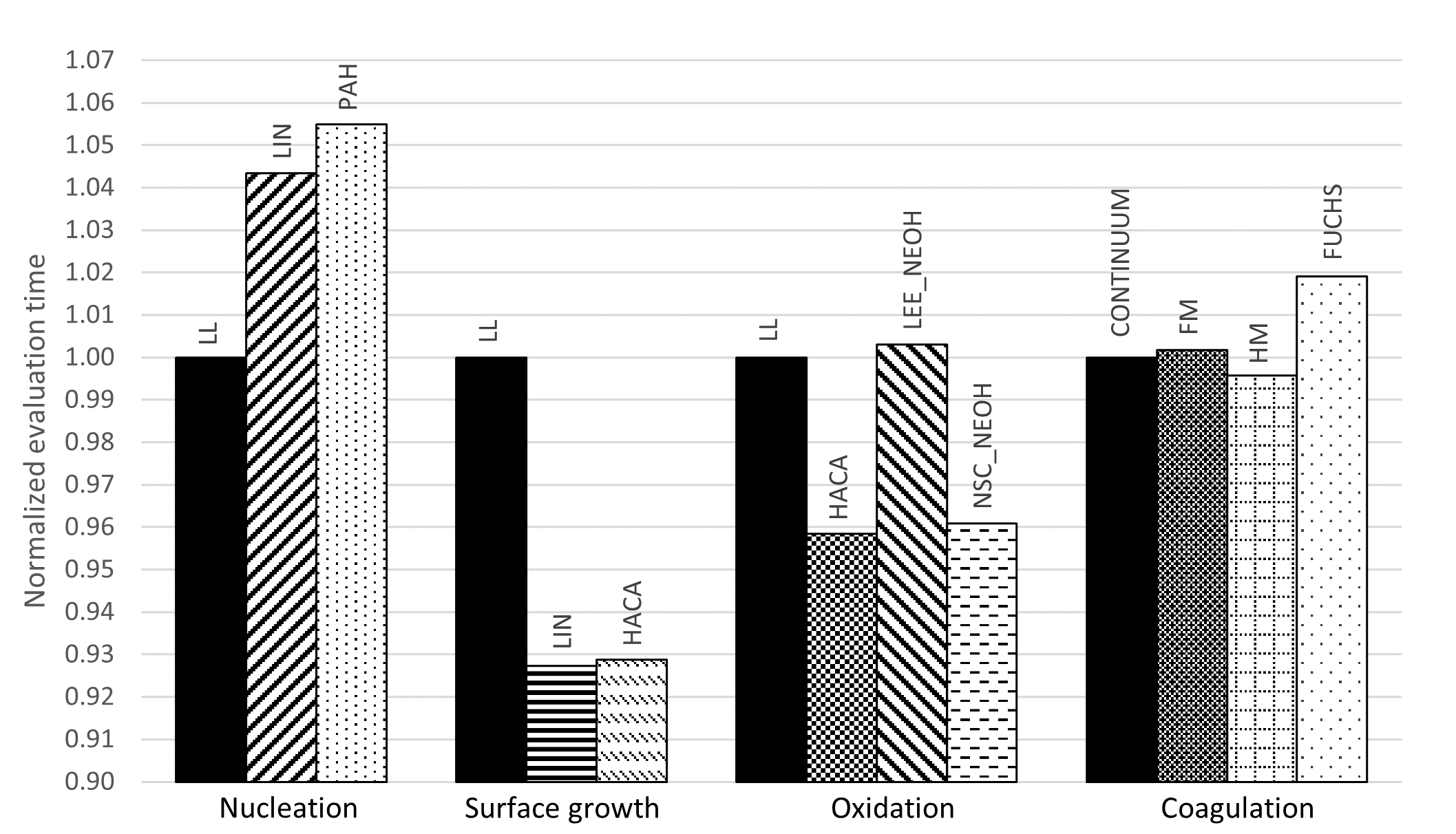
The computational cost of the implemented soot models is compared, represented by the time required for one thousand evaluations of the calcSourceTerms function averaged over one hundred trials. Comparisons were performed using a 3.5 GHz Intel i5-7400 CPU with 8 GB of available RAM via Windows Subsystem for Linux (WSL). The base sootModel object used for comparisons was initialized with LL chemistry and a 4-moment QMOM PSD treatment, and the state object represents a stoichiometric ethylene-air mixture, initially at 1 atm and 298 K, equilibrated by Cantera at constant pressure and enthalpy.
The following figure summarizes the relative cost of soot chemistry models, where only the model in question differs from the base sootModel object. Results are normalized by the runtime of the base sootModel configuration, which required an average of 0.3156 s. Even though there are differences in the mean computational time for soot chemistry models, they may or may not represent a significant addition to the computational cost of a combustion simulation as a whole.
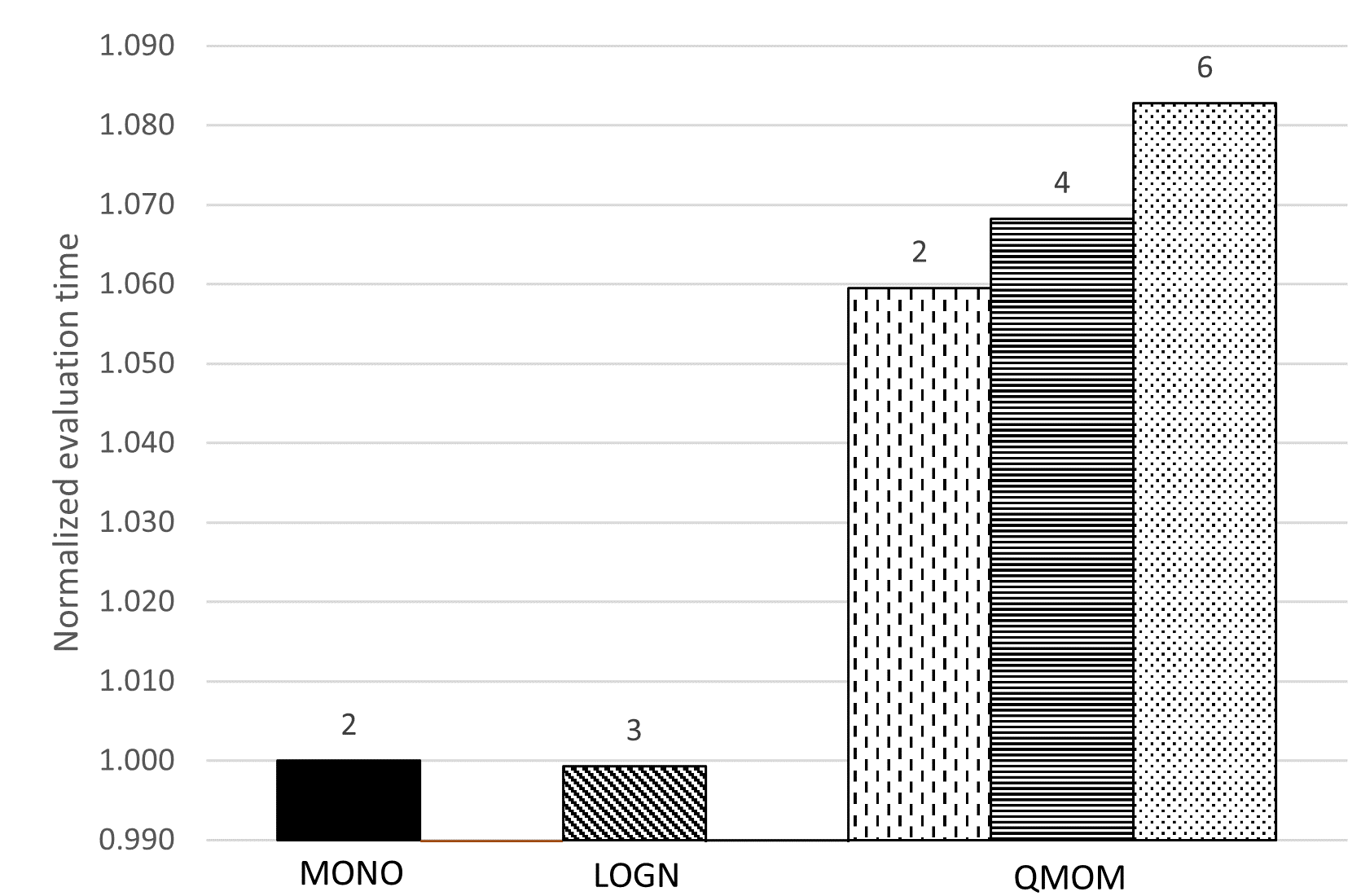
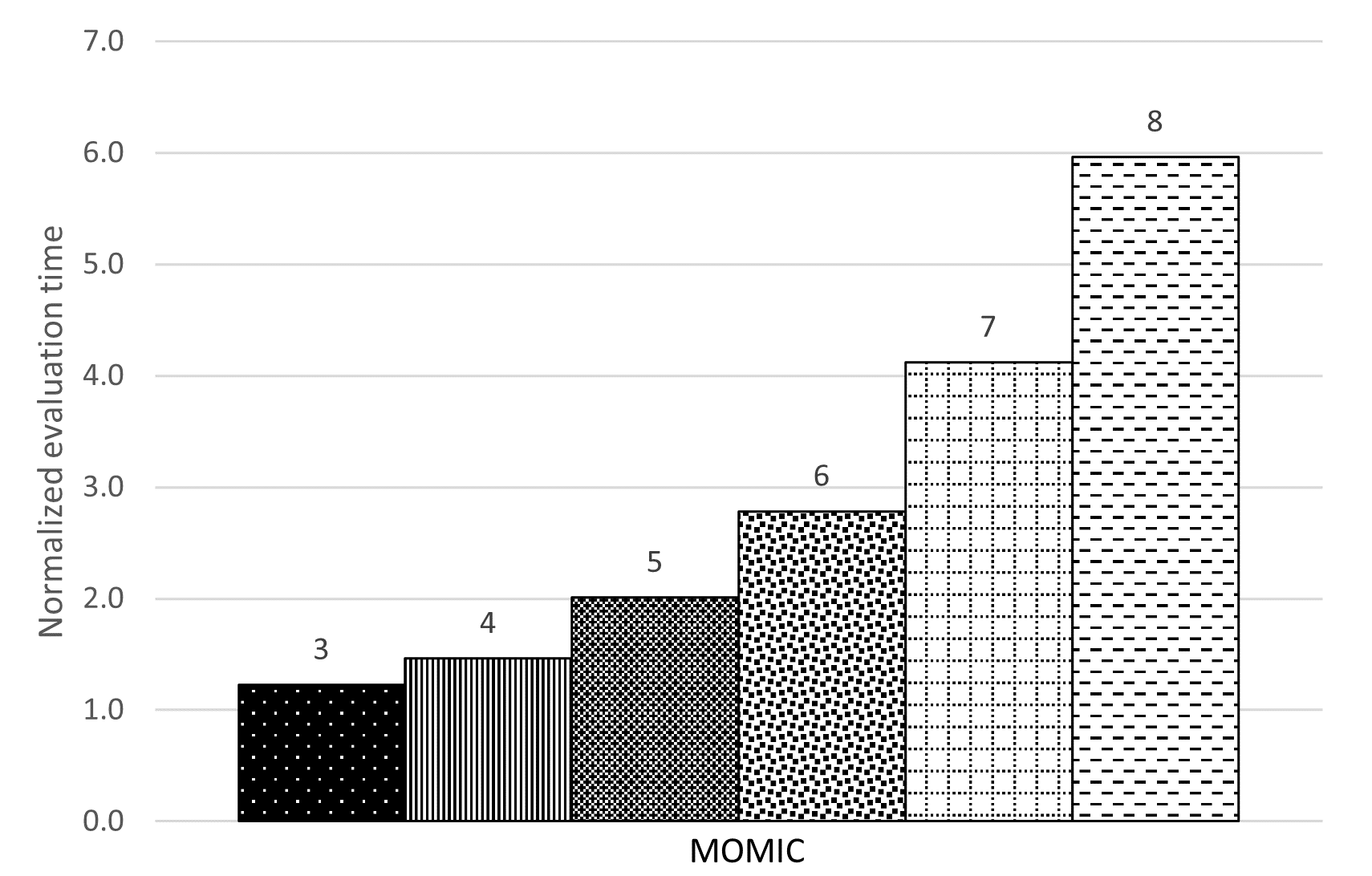
The next figures compare the relative computational cost of SootLib's implemented PSD models using the same criteria as the chemistry comparison, where only the PSD model or the number of moments used differs from the base sootModel configuration. Results are normalized by the runtime of the 2-moment MONO configuration, which required an average of 0.2961 s. The MOMIC configurations are presented on a separate plot to highlight the difference in scale compared to the MONO, LOGN, and QMOM models. The numbers above the bars indicate the number of moments used.
It is well known that the computational cost of a sectional model depends on the number of sections—and therefore the number of transport equations—defined for the system, so a comparison to that effect is not included here. Additionally, sections interact with one another differently than moments do, so a direct comparison between the sectional model and any of the moment methods would not necessarily be meaningful.
Comparison of these figures reveals two important points to consider when choosing soot model parameters for combustion simulations. First, the choice of soot chemistry presents much less variation in computational time than the choice of PSD model. That is, choosing a more complex combination of soot chemistry models is unlikely to affect the overall computational cost of a simulation as much as choosing a more complex PSD model would. Second, the choice of PSD treatment and the number of moments to use is non-trivial. Assuming a shape for the soot PSD requires significantly less computational time than more complex methods, but comes at the expense of accuracy and flexibility. Thus, choosing an appropriate soot PSD model often becomes a question of balance between accuracy and computational cost.
 1.9.5
1.9.5