C\(_β\)E 400 Creativity
The process of creativity

Show and tell

  • Today:
    • Dallin
    • Andrew
    • Brooke
  • Next week:
    • Aiden
    • Mitchell
    • Nathan

Puzzle

  • Draw this picture without lifting your pen, retracing a line, or crossing a line
  • Once you find a solution, how many others are there?
  • Problem solving: What was your approach?
  • How to generalize the solution?
  • Variations on the problem?

What is creativity?

What is creativity? Can you define it?

What areas of our lives does creativity apply to?

Does our creativity have to be fully our own, fully unique?

Is creativity an innate trait, or a learned skill, or both?

“You can’t use up creativity; the more you use, the more you have —Maya Angelou

Your heritage

You may think you don’t have talents, but that is a false assumption, for we all have talents and gifts, every one of us. The bounds of creativity extend far beyond the limits of a canvas or a sheet of paper and do not require a brush, a pen, or the keys of a piano. Creation means bringing into existence something that did not exist before—colorful gardens, harmonious homes, family memories, flowing laughter. —Uchtdorf, Happiness, your heritage

Every child is born a genius, but is enslaved by the misconceptions and self-doubt of the adult world and spends much of his life having to unlearn that perspective. —Buckminster Fuller

Can creativity be taught?

Can creativity be taught? What does Christensen say?

  • Creativity can be enhanced

“I’m not the creative type. When I sing, I’m always half a tone above or below the note. I cannot draw a line without a ruler. And the only practical use for my homemade bread is as a paperweight or as a doorstop.”

If that is how you feel, think again, and remember that you are spirit daughters of the most creative Being in the universe.

Whether creativity can be taught is not the question. You are inherently creative. The question is, will you exercise it, and develop it?

Teaching creativity

  1. Have more ideas (and don’t be afraid of the bad ones)
  2. See and observe things in different ways
  3. Defer judgement of ideas until they can be tried
    • there are no wrong ideas when brainstorming
  4. Don’t settle on the first solution (see also the secretary problem)
  5. Creative inhibitors: boundaries, cultural blocks, expected context.

Questions

Triggers

Practice 1

Think of a science-based problem to solve

  • If left up to nature, how would the problem be solved?
  • Do this in pears 😉
  • 3 minutes

Practice 2

Think like someone else (character)

Form groups of three. Choose the character based on the birth month of the youngest person in your group.

Characters

  1. Shrek
  2. Indiana Jones
  3. Your mom
  4. Iron Man
  5. Ghandi
  6. Joker (batman)
  1. Brigham Young
  2. Nacho (Libre)
  3. Dumbledore
  4. Taylor Swift
  5. Clint Eastwood
  6. Winnie the Pooh

Problems

  1. Solve the texting-while-driving epidemic
  2. Reduce toxic wildland fire smoke in our air
  3. Solve the problem of using AI to do assignments

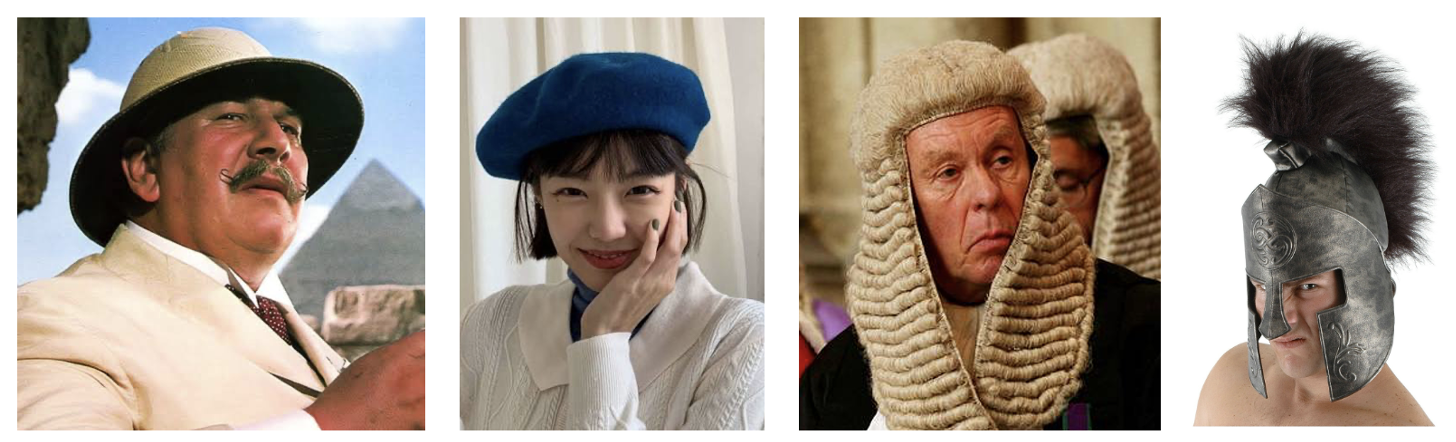
Four Hats

What are the four hats that van Oech discusses?
Exercise

  • Which hat do you usually wear?
  • Which least often? Why?
  • Share examples with your neighbors
  • Does your character in the previous practice wear a particular hat?

Exercise

Draw an emotion

Break down barriers: no rules

Problem Solving

Real problem versus perceived problem

What is the real problem?

Examples (Fogler)

  • Impatient elevator riders
  • Money printing, smearing: ink vs printing
  • Chest x-ray

Share an example you’ve experienced of a poorly defined problem with your neighbors

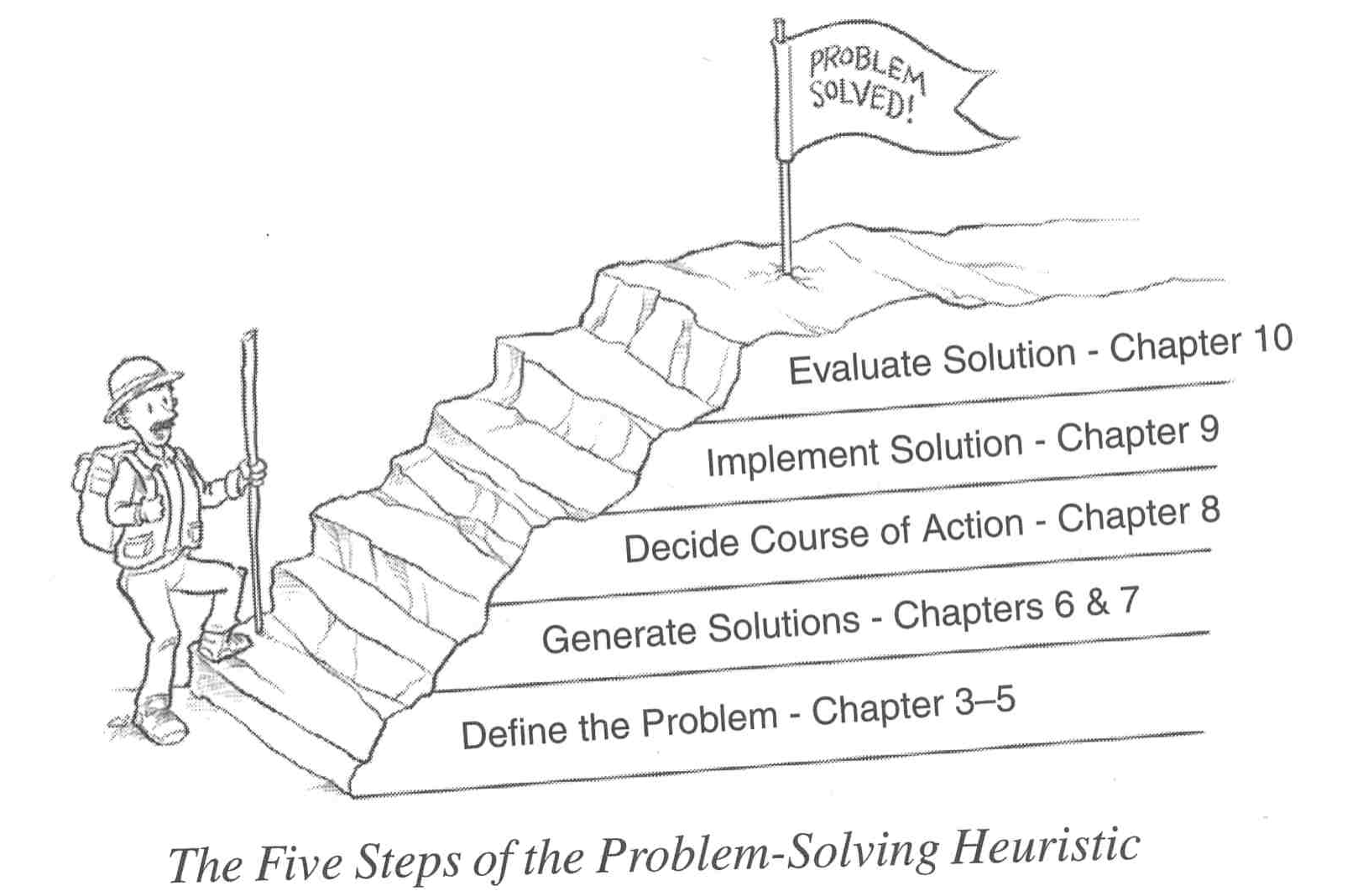
Problem Solving Heuristic

A problem-solving heuristic is a systematic approach that helps guide us through the solution process and generate alternative solution pathways. While a heuristic cannot prevent people from making errors, it provides a uniform, systematic approach to deal with any problem.

Problem Solving Heuristic

A problem-solving heuristic is a systematic approach that helps guide us through the solution process and generate alternative solution pathways. While a heuristic cannot prevent people from making errors, it provides a uniform, systematic approach to deal with any problem.

How do these align with van Oech’s hats?

Mental blocks

What are some blocks to creativity?

Mental blocks

What are some blocks to creativity?

  1. the right answer
  2. “that’s not logical”
  3. “follow the rules”
  4. “be practical”
  5. “play is for children”
  1. “that’s not my area”
  2. “don’t be ambiguous”
  3. “don’t be foolish”
  4. “to error is wrong”
  5. “I’m not creative”

How do these blocks restrict your creativity, your “hat” roles?

Did you unlock any blocks this week?

Opening mental blocks

  1. The right answer: Look for a second answer; the best way to get a good idea is to get a lot of ideas.
  2. That’s not logical: Learn soft thinking and use of metaphors.
  3. Follow the rules: Challenge the rules; destroy to create; kill a sacred cow.
  4. Be practical: Don’t. Ask what if…we didn’t have to eat or sleep.
  5. Play is for children: Play is what I do for a living; play with your problems. Laugh at them; take time to have fun at work; don’t take yourself too seriously.

Opening mental blocks

  1. That’s not my area: Specialization limits creativity. Explore; read outside your area. Expand your interests.
  2. Avoid ambiguity: Ambiguity can open the door to new interpretations. Listen to your dreams.
  3. Don’t be foolish: The fool looks at the world differently; he thinks in reverse; he is irreverent, in denial, absurd, silly, and metaphorical (“seeds eat birds,”since dead birds decompose to help seeds grow).
  4. To err is wrong: Errors are a byproduct of innovation; use them as stepping stones. What are we missing? What bad things can happen if we are successful?
  5. I’m not creative: Self-fulfilling prophecy. Believe that you can. Believe in the worth of ideas, and build on them.